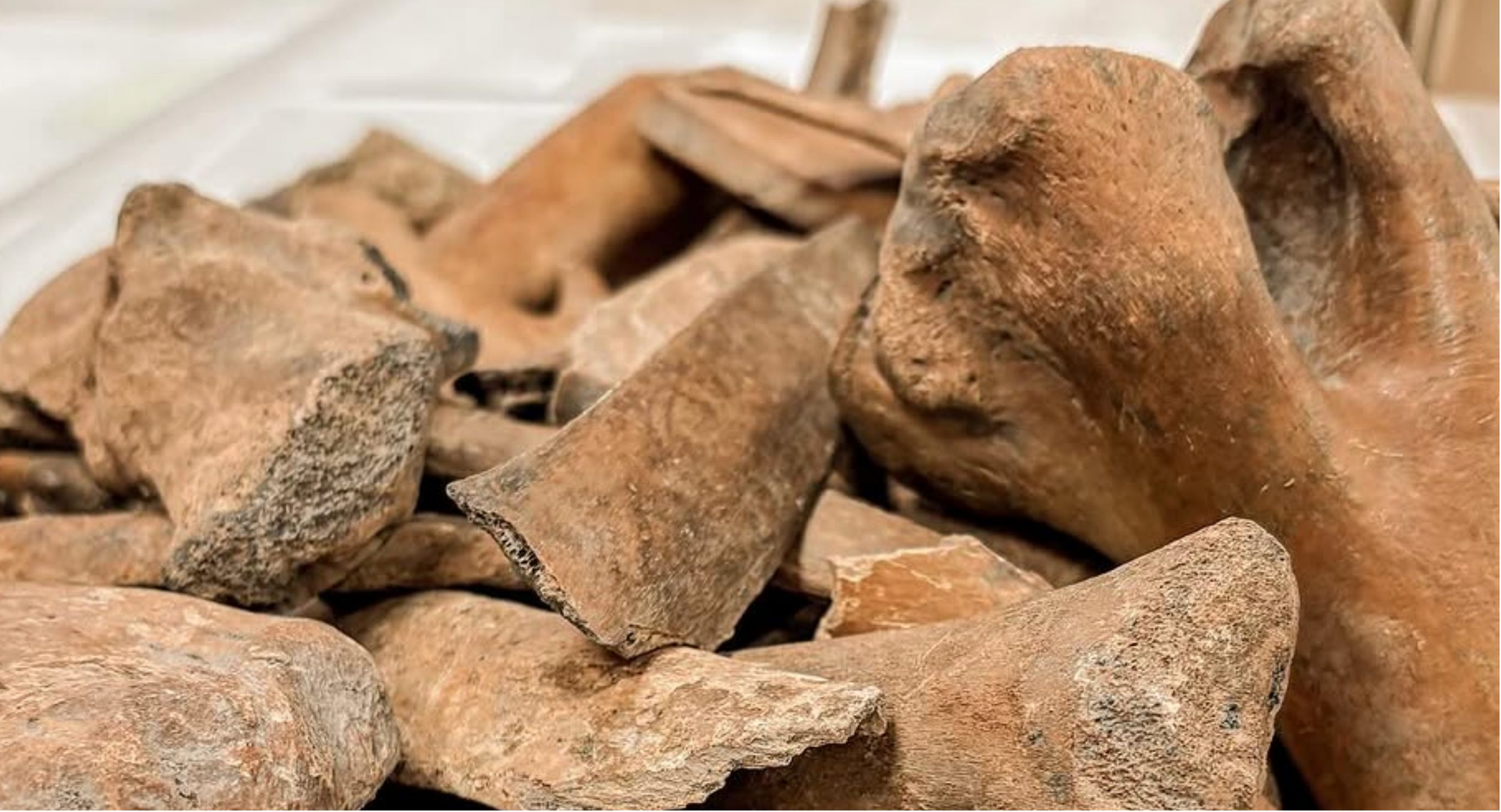
Zooarchaeological
Analysis
Each project is unique, and services can be tailored to meet specific research goals, reporting requirements, or budgetary needs. Whether you need support with a small assemblage or a larger project, we are happy to discuss how we can help!
We offer two levels of analysis to suit your project needs
We provide zooarchaeological support for archaeological projects, offering identification, documentation, and interpretation of faunal remains. All specimens will be sorted, bagged, and labelled to meet curation standards.
-
Designed to provide an initial characterization of a faunal assemblage, establish its general composition, and assess its potential for further study.
Includes:
Separation and identification by broad taxonomic class/group: e.g. mammal, bird, fish, reptile/amphibian where applicable
Basic tooth identification: e.g. molar, premolar, canine, incisor
Basic skeletal element identification when possible
Fragment counts / NISP
Identifiable vs. indeterminate fragments
Burned/calcined bone recording
Basic condition observations
Organized digital data table
Brief assemblage summary
Brief statement of recommendations for further analysis when warranted by the assemblage.
-
Designed to provide a comprehensive examination of a faunal assemblage, with detailed taxonomic identification and analysis of cultural and taphonomic modifications.
Includes:
Identification to the most specific taxonomic level reasonably possible
Skeletal element and portion
Element siding
Age indicators when observable
NISP and derived quantification when appropriate (e.g., MNI)
Butchery/cut-mark identification and recording
Burning and other thermal alteration
Carnivore/rodent modification
Weathering and other taphonomic observations
Evidence of worked/modified bone
Pathology or unusual modifications where observable
Data tables and assemblage summary
Interpretation of patterns within the assemblage
Reporting & Interpretation
Written specialist reporting can be added to either level of analysis and tailored to project requirements, from concise results summaries to more detailed interpretation suitable for inclusion in technical reports.